
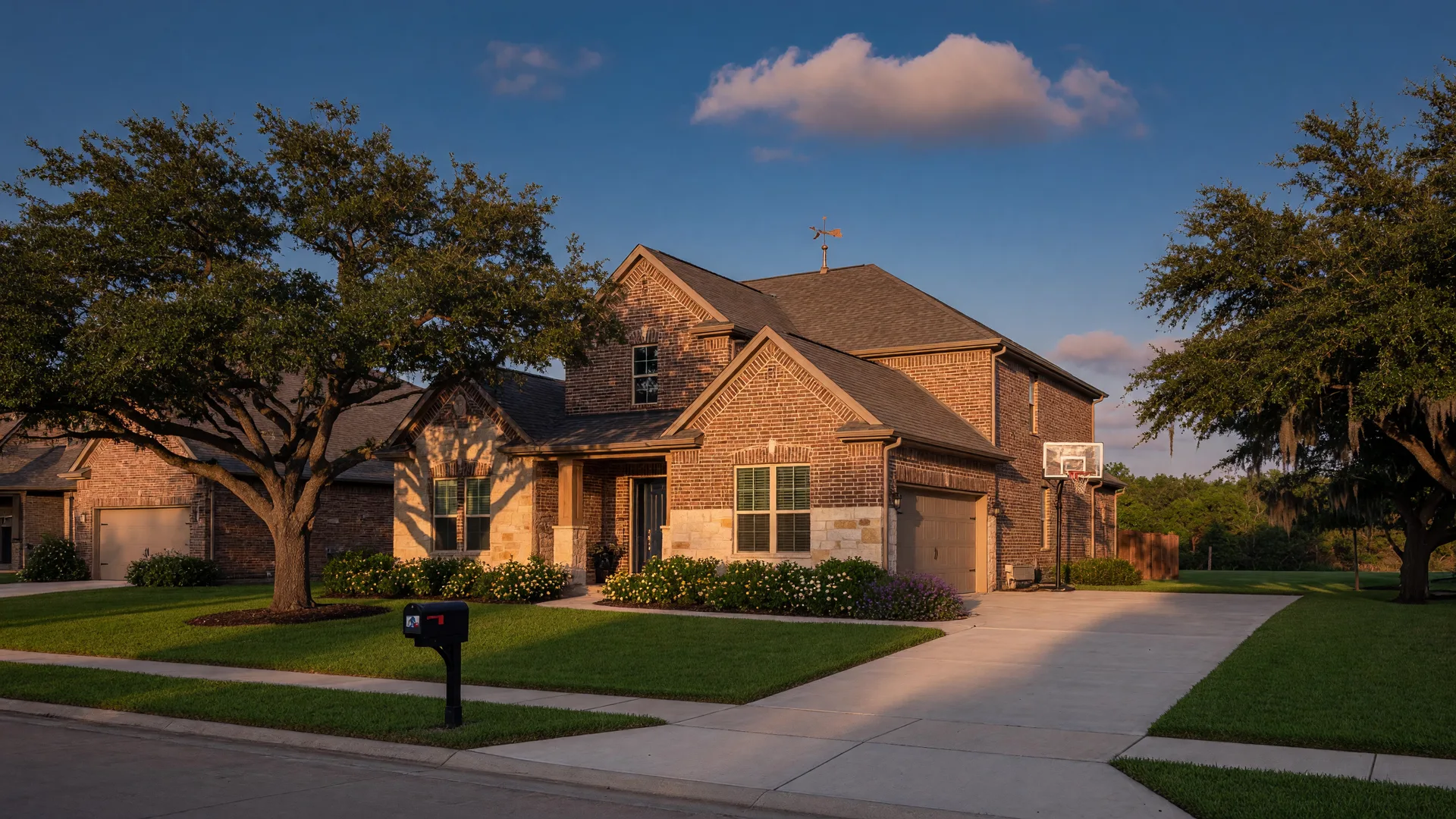
Selling a house in Katy, Texas in 2026 typically takes about two to three months, from preparing the house and launching the listing to sitting at the closing table. A well-priced home usually goes under contract within a few weeks in today's more balanced market, and the contract-to-close stretch is most often 30 to 45 days. Texas adds several rules that are easy to miss if you have never sold here: the Seller's Disclosure Notice, the option period, and the seller-paid owner's title policy chief among them. This guide walks through the entire process in the order it happens, with the current Katy market numbers and the Texas-specific paperwork you will meet along the way.
How long does it take to sell a house in Katy right now?
Katy's market has moved from frenzied to balanced, which is good news for sellers who price honestly and a warning for those who do not. In the Houston Association of REALTORS' most recent Katy-area figures, released in its summer 2026 market updates, months of inventory sat around four, the neutral zone between a seller's market and a buyer's market, with listings up more than 13% from a year earlier and median prices roughly flat to slightly down.
Practically, that means competition among listings is real: buyers have choices, so condition and price decide how fast a home sells. Well-priced, well-presented homes continue to draw showings and offers in their first weeks on market. Overpriced homes sit, the days-on-market clock keeps ticking, and every week that passes weakens the offers that do arrive. The numbers move month to month, so treat any figure here as a snapshot dated in the text, and check our Market Snapshot page, which we update as new HAR reports land.
Step 1: Get a current, broker-led valuation
Every decision in a sale flows from the list price, so step one is not a guess. Market value is what a ready, willing buyer will pay for your home today, and in a normalizing market that number is easier to misread than it looks: what you owe, what you paid, and what you hope all matter to you, but none of them sets the price.
A good valuation compares your home against recent closed sales in your immediate neighborhood, adjusts for size, condition, and updates, and studies the active competition your listing will face. It should also come with a plan: what to fix, what to stage, and what pricing strategy gives you the strongest negotiating position. When you request a home valuation from Realty Pros of Texas, you get this from a working broker, not an automated estimate.
Step 2: Prepare the home before the sign goes in
Katy buyers compare dozens of listings online before they ever book a showing, which means your listing photos and your first impression do real work. Repairs that a buyer will notice, a decluttered and depersonalized interior, and strong curb appeal are the cheapest marketing a seller can buy. Our Preparing to Sell checklist walks through what is worth fixing, what to skip, and how to stage for the buyer rather than for yourself.
Gather documents now, not the week of closing: warranties, receipts for major improvements, utility averages, and homeowner association details. The Seller Resources page keeps all of it organized. A sale moves fastest when the paperwork is already in the file.
Step 3: Price it to sell, not to test the market
The single most expensive mistake in a balanced market is pricing above the evidence and waiting for the market to catch up. Everyone remembers the 2021 and 2022 frenzy; that pricing era is over, and today's buyers will simply move on to the next listing. A pricing strategy built on current comparable sales, active competition, and honest condition adjustments does the opposite: it attracts the broadest pool of buyers in the first weeks, which is exactly when a house has maximum leverage.
This is where broker-level experience shows. The How We Sell Homes page describes our full pricing and marketing approach, and every listing decision starts with the data, never a hope.
Step 4: What happens once your home is live
Once the listing is live, a rhythm sets in: professional photography and the MLS listing, distribution to the major buyer portals, a schedule of showings and open houses, and feedback from every agent who walks through. Expect questions about schools, flood history, neighbors, HOA rules, and why you are moving; these are all normal parts of the process.
Your listing agent manages the calendar, works with buyers' agents to confirm they are qualified, and keeps you updated on how the market is reacting. If showings are strong but offers are not arriving, that is data, not bad luck, and it tells us whether to adjust price, presentation, or both, early, while the home still has momentum.
Step 5: Offers, the option period, and earnest money
Most Katy resales use the Texas Real Estate Commission's One to Four Family Residential Contract (Resale), the standard statewide form, and two parts of it surprise sellers more than anything else: the option period and earnest money.
The option period is a negotiated window, commonly 5 to 10 days and most often about a week, during which the buyer can terminate the contract for any reason at all by paying a nonrefundable option fee, typically $100 to $500. If the buyer walks during the option period, their earnest money is refunded and the option fee stays with you, compensating the seller for taking the home off the market. If the sale closes, the option fee is credited toward the purchase price.
Earnest money is the buyer's good-faith deposit, commonly about 1% of the price, held in escrow by the title company and credited to the price at closing. Under the standard contract, the option fee and earnest money are due within three days of the contract's effective date. If the buyer defaults outside their contract rights, the seller may keep the deposit as liquidated damages, but the requirements are specific, and this is not a place to improvise. An experienced broker knows these rules cold and keeps the timeline moving.
Step 6: Disclosures, inspections, and the lender's appraisal
Texas law (Property Code Section 5.008) requires a seller of a resale home to deliver a written statement of known material defects on the Texas Real Estate Commission's Seller's Disclosure Notice, on or before the effective date of the contract. Honesty here protects the sale: a problem that surfaces during the option period can end the deal, while a disclosure made up front is handled in the price and the repair negotiation.
Most buyers also order a professional home inspection during the option period, and its findings drive the next negotiation: repairs, credits, or a price adjustment. For financed buyers, the lender adds an appraisal to confirm the home supports the contract price. Neither is a pass-or-fail for the seller; both are real information, and handling them calmly and responsively is where experienced representation pays for itself.
What does a seller pay at closing in Texas?
Texas has no state transfer tax, which keeps the seller's side of the ledger lower than in many states. On a typical resale, the seller customarily pays: the owner's title insurance policy (the policy that protects the buyer, at rates regulated by the Texas Department of Insurance), the real estate commissions for both agents, prorated property taxes up to the closing date, and HOA transfer or resale and estoppel fees where the home belongs to an association. Recording fees fall to the buyer in most counties. Every item is negotiable and written into the contract, so your settlement statement, not a rule of thumb, is the final word.
As a planning range, expect seller-side costs of roughly 1% to 3% of the price excluding commissions, or 6% to 10% when the customary 5% to 6% in commissions are included, a pattern the standard Texas contract and title process follow at typical rates. The title policy alone usually runs about 0.5% to 1% of the price. None of this should be a surprise on closing day: your agent should walk you through a full net-proceeds estimate at listing time, which is when you should first see it.
Five mistakes that quietly cost Katy sellers money
- Pricing from emotion or an online estimator instead of current neighborhood sales. The estimator does not know your condition, your updates, or your competition, and neither does a wish.
- Listing before the home is ready. A house that launches rough spends its honeymoon weeks correcting first impressions instead of collecting offers.
- Treating the option period and repair negotiation as formalities. These are the two parts of a Texas contract where deals are won, lost, and re-priced.
- Hiding a known issue instead of disclosing it. What surfaces in the option period becomes a negotiation; what is disclosed up front stays in the price.
- Going without local, broker-level advice. Any agent can put a sign in the yard; a broker with decades of Katy transactions knows how to price, present, and negotiate in the market that exists today, not the one that existed in 2021.
A note on the numbers
Katy market figures above come from the Houston Association of REALTORS' summer 2026 Katy and Western Houston suburb updates, the most current published at the time of writing. Texas contract, disclosure, and closing rules come from the Texas Real Estate Commission's standard contract and Seller's Disclosure Notice requirements, Texas Property Code, and the Texas Department of Insurance. Rates and rules change, markets move, and every sale is different, so treat this guide as exactly that, and ask us about your specific situation and address.
Get a current valuation before you decide anything
The fastest way to learn where your home fits in today's Katy market is a current, broker-led valuation, and there is no cost or obligation. Carol and the Realty Pros of Texas team will compare your home against the latest neighborhood sales, tell you honestly what it should sell for, what it would take to get there, and what you would net after the Texas costs above. Call Carol at (832) 212-2772 or request your home valuation online.