
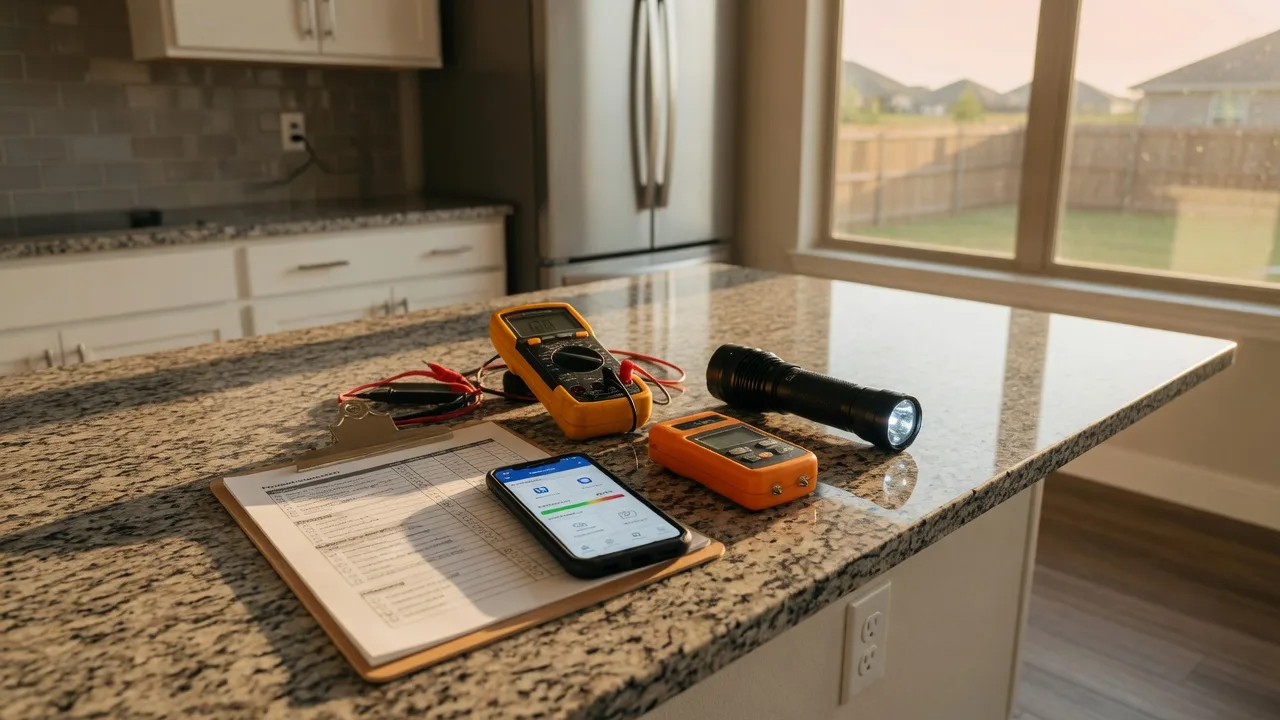
How much does a home inspection cost in Texas? A standard single-family inspection typically runs $300 to $600, and on a Houston-area home under 2,500 square feet the typical cost is about $475, with most quotes landing between $350 and $550. On a home near Katy's September 2026 median price of about $370,000, that is roughly one-tenth of one percent of the purchase price, which makes the inspection one of the best-value checks you will buy in the entire transaction.
The inspection is the heart of the Texas due diligence process, and it happens inside your option period, the negotiated window where you can walk away for almost any reason. Here is what a standard report actually covers, which inspections cost extra in the Houston area, and how to use the findings when you negotiate.
What does a standard Texas inspection actually cover?
Under the Texas Real Estate Commission's Standards of Practice, a licensed inspector examines the readily accessible, visible, and installed systems of the home. On a typical Katy resale that means a walkthrough of the whole property, inside and out:
- Structure: the foundation, walls, floors, ceilings, and roof structure, looking for visible signs of movement or damage.
- Roof and attic: the covering, flashing, gutters, attic framing, and visible insulation and ventilation.
- Electrical: the panel, breakers, visible wiring, outlets, and fixtures.
- Plumbing: supply and drain lines, water heater, fixtures, and visible leaks.
- Heating and cooling: the HVAC equipment, including its age when it can be read from the unit, along with visible ductwork.
- Interiors: doors, windows, and attached appliances, plus signs of moisture, pests, or prior settling.
The inspector works from the TREC Standards of Practice, reports what is visibly wrong or unsafe, notes items that need maintenance, and delivers the findings in a written report you keep. It is a condition report, not a clean bill of health: every used home has a list, and the question is always which items matter.
What a standard inspection does not cover
The TREC Standards of Practice do not require an inspector to determine whether termites or other wood-destroying insects are present, and they do not cover everything a specialist would. Things that are typically outside the base report include:
- Termite and wood-destroying insect (WDI) clearance, which is a separate licensed inspection.
- Foundation engineering: whether slab movement is active, and how severe it is, is a structural engineer's call.
- A sewer line scope: a camera run through the plumbing line from the house to the tap.
- Pools, septic systems, wells, and detached outbuildings, which need their own specialists.
- Indoor air quality, mold testing, and code-compliance review.
None of that is a flaw in the report. It is the difference between a generalist and a specialist, and in the Houston area the two specialists that matter most are almost always worth the extra money.
Which inspections cost extra in Houston and Katy?
Termite and WDI clearance, about $75 to $150. Houston inspection firms typically quote $75 to $150 for a wood-destroying insect report, and VA loans require one, while conventional and FHA lenders often ask for it too. Termites and other wood-destroying insects are a real Texas concern, and a separate licensed WDI report is the only one that answers the question definitively.
A foundation inspection by a structural engineer, about $500 to $800. Katy and Houston sit on expansive clay soils that move as moisture changes, and because of that, foundation movement is a common thread through local inspection findings. A general inspector can flag the visible signs: cracked sheetrock, doors that stick, windows that bind, sloping floors. But the definitive answer on whether a slab needs leveling, and what it would cost, comes from a structural engineer's report, which Houston-area buyers typically pay $500 to $800 for, with reports commonly running between $300 and $750 depending on the engineer and the scope.
A sewer scope is the third add-on buyers in older Katy and West Houston neighborhoods often choose, since a camera run costs far less than discovering a root-blocked line after closing. Ask your agent which add-ons are common for the specific age and type of home you are offering on. The short version for this area: budget for the base inspection plus a termite report, and treat the engineer as necessary whenever the general report flags foundation concerns.
When does the inspection happen in a Texas transaction?
The inspection happens after your offer is accepted, inside the option period, and that timing is one of the strongest buyer protections in Texas. The option period is a negotiated window, typically seven to ten days in the Katy area and commonly anywhere from three to ten calendar days. You pay the seller a small option fee, often $100 to $500, in exchange for the right to terminate the contract for almost any reason, or no reason, during that window.
Under the TREC residential contract, the seller must give you and your licensed inspectors access to the property at reasonable times with utilities on, so the inspection is scheduled quickly after acceptance and the report comes back with days to spare. If the findings change your mind, you can walk away before 5 p.m. on the last day of the period and your earnest money comes back in full. The only money you lose is the option fee and the cost of the inspections themselves. We covered this window in depth in our guide to the Texas option period; the short version is that the inspection is the main event inside it.
How do you choose a good inspector in Texas?
- Verify the license. Texas residential inspectors must hold a TREC license, and you can look any license number up on the TREC website. If your agent recommends someone, check the license yourself.
- Read a sample report. A good report is organized, specific, and photographed. One that reads like a form with checkmarks will be hard to negotiate with later.
- Go along for the inspection. The two to three hours on site are where you learn how the house works, where the shutoffs are, and how the systems were maintained. Attending is free education.
- Ask about add-ons up front. Confirm the base scope, the price, and what a termite report or engineer referral would add before you book.
- Choose an inspector who only inspects. An inspector whose business depends on selling you repairs has a different incentive than one whose only product is the report.
After the report: negotiate, request repairs, or walk away
The report is a list of observations, not a list of demands. The skill is sorting the findings into three buckets: safety issues, like exposed wiring or a failing HVAC in the middle of a Texas summer; major systems with a real life expectancy, like the roof or the foundation; and cosmetic items that are simply the condition of a used home. Only the first two are worth negotiating over.
Inside the option period, you can request repairs, ask for a credit to cover work you will hire out, or renegotiate the price, and the seller is not obligated to say yes to any of it. In practice, a motivated seller in a balanced market will usually meet you somewhere reasonable on the majors, especially when the request comes with a dollar figure and a licensed report behind it. If the two sides cannot agree, you still hold the option-period exit: terminate by the deadline and your earnest money comes back. That combination, a credible report plus a workable exit, is why the negotiation usually stays civil.
A note on the numbers
The cost figures above reflect 2026 consumer guides and Houston-area inspection company pricing: a statewide typical range of $300 to $600 (Houzeo and iBuyer, 2026), a Houston-area average of about $475 for homes under 2,500 square feet with a typical range of $350 to $550 (ARC Inspection Group, 2026), WDI reports at $75 to $150, and structural engineer foundation reports at roughly $500 to $800 in Houston. The $370,000 illustration uses Katy's September 2026 median single-family price from Houston Association of REALTORS data, with Katy homes averaging about 41 days on market and roughly 3,200 active listings at that time. Option-period norms come from TREC and the Texas A&M Real Estate Research Center. Quotes vary by inspector, home size, and scope, so treat these as planning numbers and confirm real pricing when you book.
Ready to put an offer on a Katy or Houston home?
The inspection is one piece of a well-run offer, and the option period only works if you use it with a plan. If you are looking in Katy or Greater Houston, we will help you budget the inspections, read the report, and negotiate with the seller with a broker's perspective on the local market. Call Carol at (832) 212-2772 or send a note through the contact page. For context on prices and supply, the Market Snapshot tracks Katy and West Houston month by month, and our Katy homes guide walks through how communities and neighborhoods compare before you even book a tour.